
Lakeland Previous Resident Sources
A sound address history separates ownership from occupancy. Polk County deeds identify transfers of title, while Lakeland directories and federal census schedules can name people who lived at the site. Maps and permits describe the building itself. Obituaries and probate records can explain where a former owner or occupant went and how an estate passed. The best starting source depends on the date being studied.
| Source | Years It Covers | Where Held | What It Shows |
|---|---|---|---|
| Official Records index | 1957 to present | Polk County Clerk | Owners, instruments, dates, and legal descriptions |
| Lakeland city directories | Confirmed 1915 to 1960 runs | Lakeland History Room | Residents, spouses, work, and addresses |
| Federal census | Useful locally from 1900 to 1950 | NARA and library databases | Households and nearby people |
| Sanborn fire maps | Florida images mainly 1884 to 1923 | UF and Library of Congress | Building footprint, use, and address clues |
| Earlier deed books | Before 1957 | Clerk, History Center, FamilySearch | Grantor, grantee, and legal description |
For a recent Lakeland house, start with the current parcel and work backward through deeds. For an early central-city property, put directory entries beside maps and census years. The loss of most 1890 census schedules makes deeds, tax rolls, newspapers, and directories vital between 1880 and 1900. No one item proves every occupant, and a deed date is not a move date.
Start With Lakeland Parcel Facts
The Polk County Property Appraiser search accepts owner, site address, and parcel ID. Search the physical address, then save the parcel number, current owner, situs address, mailing address, legal description, subdivision, sales, and map link. A situs address is where the parcel sits; the mailing address is where tax mail goes. They may differ, so a mailing match alone does not prove owner occupancy.
The legal description is the durable link. Lot, block, and subdivision wording can survive changes that break a street search. Lakeland's irregular annexations also mean that a postal Lakeland address may fall outside city government. Check the City Address Information Lookup or county GIS before asking a city department for permits or code records. Keep a dated research log because parcel rolls change.
The parcel card also provides a useful inventory for later checks: owner names, assessed and taxable values, exemptions, land and building data, qualified and unqualified sales, deed references, and links to maps or documents. Copy only fields relevant to the address history. A homestead indicator can support an owner-occupancy theory, but it does not list the rest of the household. Sale history offers a quick path into the deed index, yet each displayed sale still needs confirmation in the recorded instrument. If the parcel was split or combined, compare the present legal description with earlier plats before attaching old names to the modern lot.
Walk Polk Deeds Backward
The Polk Official Records Online Search covers recorded documents from January 1, 1957. It searches party names, document types, file numbers, and book and page citations. Enter a party as Last-Name First-Name with no comma. Common names need a date range or document-type filter. Open each deed and compare its legal description with the parcel, not just the surname.
- Copy the parcel ID, current owners, full legal description, and displayed qualified sale.
- Open the linked instrument, or search the current owner as grantee near the sale date.
- Record the grantor, grantee, date, consideration, legal description, and prior citation.
- Search that grantor as an earlier grantee. Repeat while the land description matches.
- At 1957, move to clerk books, History Center material, or FamilySearch microfilm.
- Grantor and grantee
- The grantor transfers an interest; the grantee receives it.
- Chain of title
- The linked sequence of recorded transfers for the same land.
- Legal description
- The formal land description used to confirm that two deeds concern the same parcel.
Trust transfers, probate, foreclosure, or parcel splits can interrupt a simple name chain. A probate transfer may require an estate docket and personal-representative deed. A foreclosure trail can include a lis pendens, final judgment, certificate of title, and later deed. Treat each as a separate event.
Cross Lakeland's 1957 Cutoff
The online date marks the public index's start, not the start of Polk recording. Earlier previous residents require grantor-grantee books and deed volumes. The Polk County History Center occupies the county's 1908 courthouse in Bartow and maintains a Historical and Genealogical Library. FamilySearch catalog entries for Florida, Polk County can point to deed, marriage, and probate microfilm, though some images need a free login or affiliate-library visit.
Take a book and page, subdivision name, and both party names to the clerk or History Center. Ask for the next earlier deed affecting the same legal description. This slower route avoids forcing modern street text onto an old index. The courthouse now serves as the bridge between the digital cutoff and Polk's paper record trail.
The Polk Clerk Document Center collects official-records, probate, marriage, and confidentiality forms used when the online index is not the whole answer.
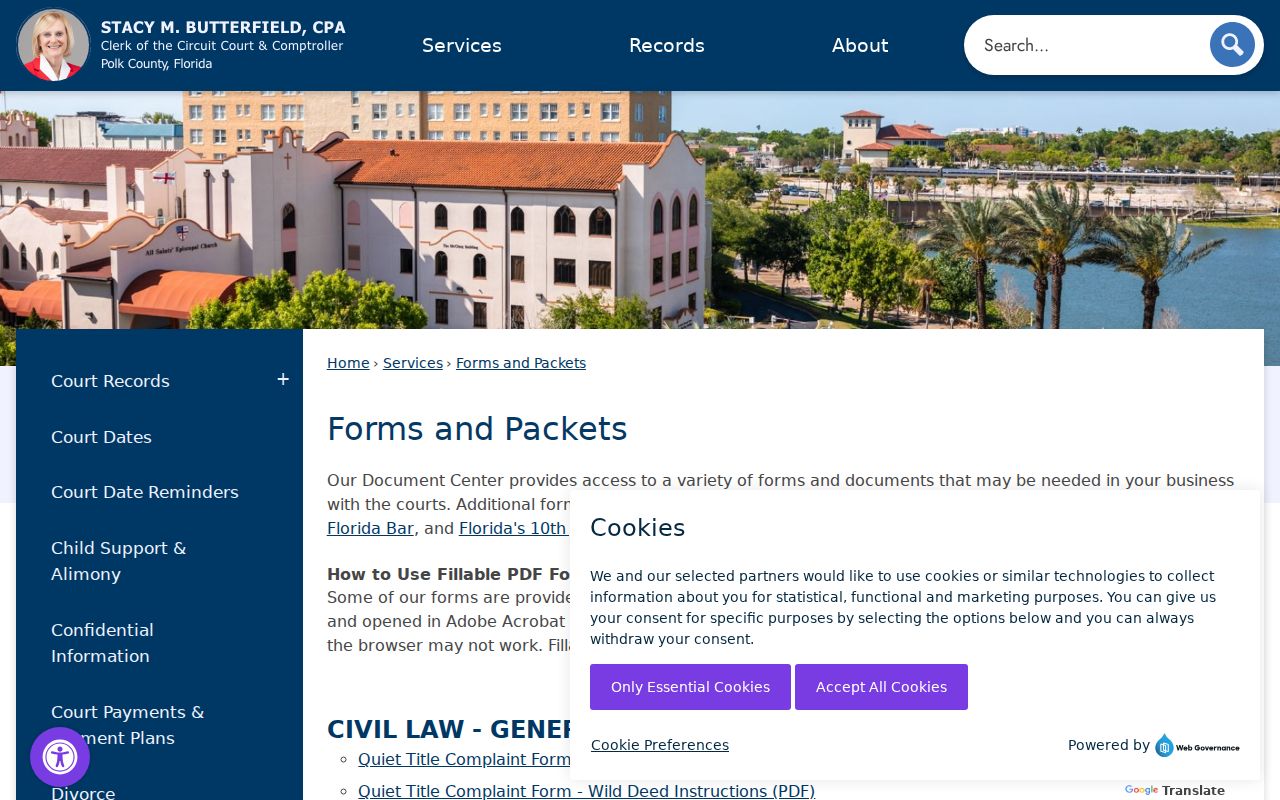
Choose the form tied to the actual record and keep its case, instrument, or book-and-page citation with the request.
Lakeland House Research Help
The Lakeland History Room expressly offers house and property research. Staff can cross-check an address and owner against directories, building plans, photographs, clippings, maps, genealogy sources, and the Ledger obituary index. Bring old forms of the street name, the legal description, parcel number, likely construction era, and names already found.
This is a strong fallback when portal searching stalls. Printed Lakeland directory evidence is confirmed from 1915, with frequent volumes through 1960. Exact later physical runs and reverse-directory years need a staff shelf check. Do not assume continuous coverage or that every book is online.
Map Earlier Lakeland Houses
The University of Florida Sanborn collection provides digitized Florida fire-insurance sheets, chiefly for 1884 through 1923. Lakeland sheets can show a structure's outline, materials, use, and street number at a dated point. They help show that a building existed and reconcile address changes, but they do not prove ownership.
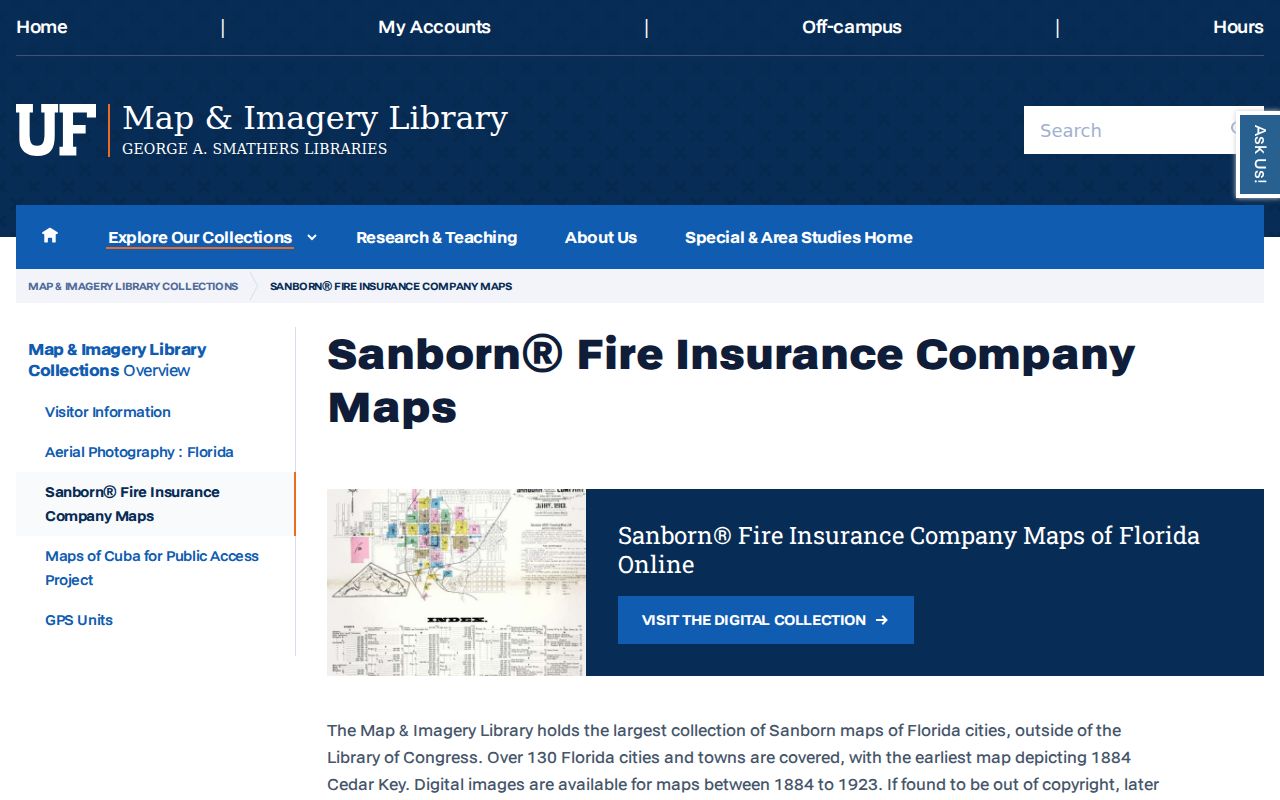
Pair maps with Lakeland permits, code cases, photographs, and historic-district research. No authoritative citywide street-renumbering crosswalk was found. When numbers conflict, compare map position, street-name indexes, neighboring lots, and the legal description.
Match Lakeland Residents by Era
Ownership records miss renters and relatives. A practical flow is: directory address, adjacent directory years, reverse street section if present, matching census schedule, then deeds and obituaries. The Lakeland city directory collections give the fuller account of local volumes.
- Begin with one known name, year, or address and record every spelling.
- Check nearby directory editions to mark arrival and departure.
- Pair 1920, 1930, 1940, and 1950 entries with public census households.
- Use deeds to test ownership because a listed resident may have rented.
- After a disappearance, search obituaries and probate files.
The 72-year rule makes 1950 the latest full public census until 1960 opens in 2032. A directory omission is not proof of absence. Early mainstream publications may underrepresent Lakeland's Black community, so church, school, neighborhood, and newspaper collections can supply names the main directory missed.
Lakeland Obituary Trail Gaps
Lakeland Public Library's Ledger obituary index covers 1911 through 1975 and resumes in 1999, leaving a documented 23-year gap. Search it after a person vanishes from a directory or deed chain, but use newspaper research or staff help for the missing span. An obituary can supply relatives and later places. It does not prove occupancy on a precise date.
Polk probate adds a court-based endpoint. A petition, order, will, or representative record may name heirs, and a recorded estate deed can reconnect those names to title. Together, obituary, probate, and estate deed form a useful family-history chain. None alone proves every former resident.
Polk Records Online contains probate case information with coverage that varies by division. Case data can reach the mid-1960s, while available images may cover less time. Search the person's name, note the case number and parties, then ask the clerk's Records office for an unavailable or certified item. The PIER portal is another route for a specific public-record request and advises checking PRO for free unofficial copies first.
For an eligible family-history request, the Florida Department of Health in Polk County explains local birth-certificate service.
Local issuance does not remove Florida's eligibility, identification, and confidentiality rules.
The statewide Florida birth certificate instructions set out the application and authorized-request process.
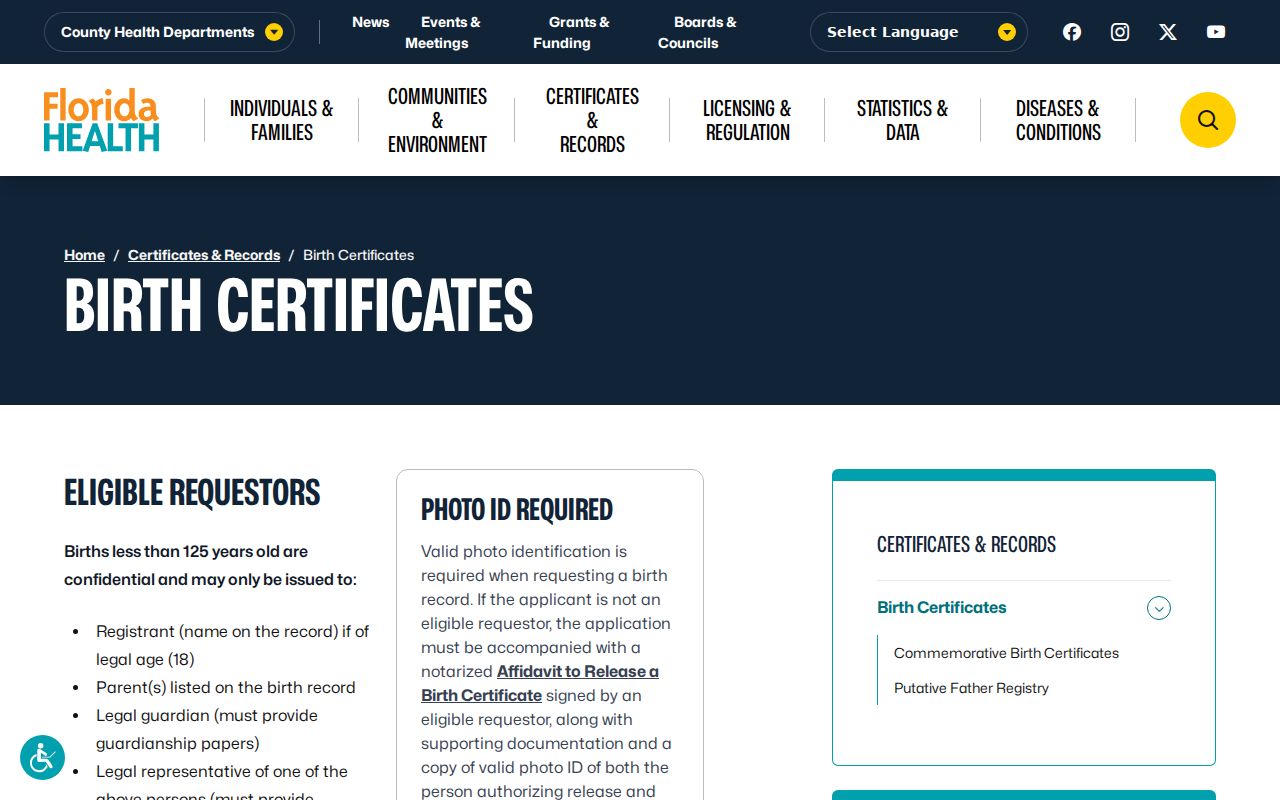
A birth record less than 125 years old is confidential, so a directory clue never substitutes for eligibility.
When the trail ends with a death, consult the Florida death certificate guidance for available certificate types and restrictions.
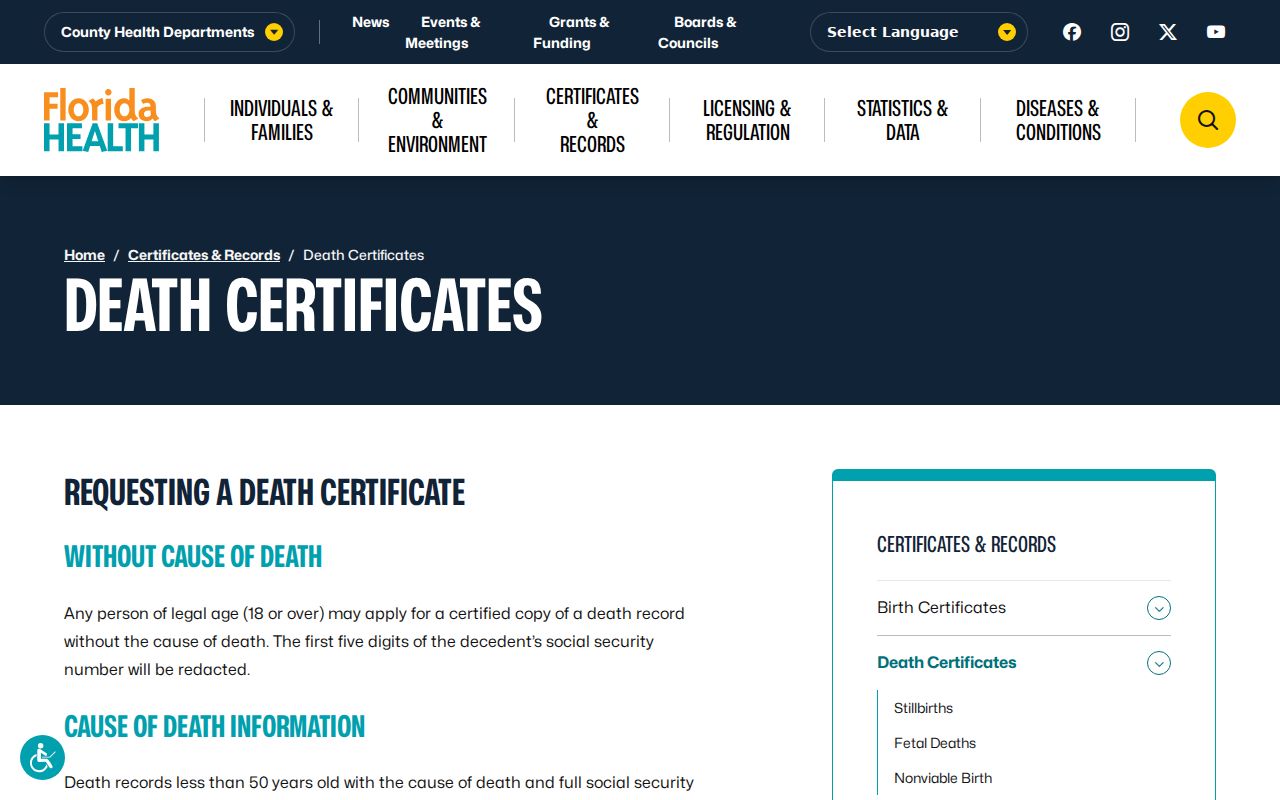
Cause-of-death information remains restricted for 50 years, while a public index or obituary may offer a lawful first lead.
Separate Lakeland Owners and Occupants
Previous residents and former owners overlap, but they are not synonyms. The appraiser and deed chain establish recorded ownership. Directories and census schedules identify household members and renters, while homestead status and matching addresses only support an inference of owner occupancy. Utility customer and account records are not a public directory.
Build a timeline with a separate row for every dated source. Mark each claim as owner, occupant, relative, or uncertain. That stops a sale date from becoming an invented move date. If title splits, combines, or enters a trust, return to the legal description before continuing.
Allow for different source dates. The tax roll is an assessment snapshot. A deed records a transfer, a directory reflects its publication cycle, and a census records an enumeration day. Permit and code files describe work or enforcement, not a full household. Save the date printed on each item and keep conflicts visible until another source resolves them. This is especially useful for seasonal addresses and older Lakeland homes with changed street labels.
Public-record access also has real limits. Restricted images and protected addresses can be withheld, while vital records have their own eligibility rules. Do not treat a closed field as permission to infer its contents. Ask the custodian what public index entry, redacted copy, or certified record is available. Corrections should go to the office that keeps the source: the Property Appraiser for parcel data, the clerk for recording and probate indexes, and the library for catalog descriptions. That preserves a clear source trail for every claim about who lived here before.
Lawful use. Research Lakeland previous residents for house history, genealogy, or estate work. Never use personal details to track, threaten, or harass a living person.