
Lakeland Neighbors by Block
A block lookup works best as a set of narrow questions. The parcel map shows the land around one point. The assessment roll ties each parcel to a recorded owner and mailing address. A customized voter file can return allowed registration fields for a chosen area. Lakeland's neighborhood directory names civic leaders and meetings. None is a complete household list, so match the source to the question.
| Source | What It Shows About a Block | Access |
|---|---|---|
| Polk GIS and parcel roll | Parcel shapes, owners, mailing addresses, land use, and values | Free, parcel by parcel |
| Polk voter custom list | Registered voters selected or sorted by geography | Request; exempt fields removed |
| Lakeland neighborhood map | Named area, boundary, and registration status | Free city map |
| Association leader directory | Voluntary leaders, meeting details, and public contacts | Free city directory |
| Historic directories and census | Past households and nearby enumerated residents | Library and archives |
The owner named on a parcel may live elsewhere, and renters or relatives often do not appear on the roll. Compare situs and mailing addresses, but treat a match as evidence, not certainty. Voter records omit minors, noncitizens, eligible nonregistrants, and protected voters. A stale address may also remain while confirmation runs its course.
Place the Lakeland Address
Use the Lakeland Address Information Lookup before opening other records. Its address result can report whether the site lies inside city limits, along with ZIP, neighborhood, historic district, zoning, fire district, and other attributes. This matters because a Lakeland mailing address does not prove City of Lakeland jurisdiction. City limits weave through the postal area.
After jurisdiction is clear, save the standardized street form and named neighborhood. Move to the county parcel system for ownership and legal description. The city tool is useful for place and service boundaries, but it does not list owners. That division of labor prevents a common mistake: asking a city office for a county or unincorporated record.
Lakeland's lakes, rail lines, highways, and narrow municipal corridors make visual checks worthwhile. A postal block can cross a city boundary or span more than one named community. The city's 2025 planning map distinguishes city limits from the broader planning area, so record both rather than treating them as the same. ZIP codes are delivery zones and do not settle the question. If an address result looks wrong, contact Lakeland Planning for a city parcel or the county GIS and addressing staff for a county parcel. Do not derive jurisdiction from the parcel number itself.
Map Lakeland Neighbors by Parcel
The Polk County Geoportal supports address or parcel searching, zooming, layer controls, and identify clicks. County layers may include parcel boundaries, roads, aerials, jurisdiction, zoning, flood information, districts, and infrastructure. The map is a research aid, not a survey. Begin at one confirmed parcel and pan only far enough to define the immediate block.
- Locate the address and confirm the highlighted parcel.
- Click each adjoining polygon and record its parcel ID.
- Open each ID in the Property Appraiser roll for owner and mailing details.
- Compare situs, mailing, and homestead information without assuming occupancy.
- Repeat only for the block face or radius that answers the question.
A parcel identifier is more stable than a typed street form. It also connects the map to deeds and subdivision plats. For a complete named-road chain, use the Lakeland street directory; the block method stays focused on the few parcels around one address.
Lakeland Neighborhoods Are Not Rosters
Lakeland identifies roughly 100 geographic neighborhoods but only about 30 registered associations. Roads, railroads, and lakes often shape the boundaries. That gap matters: a place can have a recognized neighborhood identity without a registered group, and registration does not disclose all households. Examples on official city resources include Dixieland, Historic Lake Morton, Parker Street, North Lake Wire, Camphor Heights, Cleveland Heights, Beacon Hill, Lake Bonny, Kathleen, and Swannanoa/Tigertown.
The map and association list answer different questions. A map names the area containing an address. Registration provides liaison help, a mapped boundary, and a general web listing. Use neither to claim that a person belongs to an association. Private clubs, watch groups, congregations, and homeowners groups may keep rosters, but public access cannot be assumed.
Meet Lakeland Neighborhood Leaders
The Lakeland neighborhoods directory can show an association name, meeting address, frequency and time, leadership name and public contact, association position, and Neighborhood Advisory Council role. Camphor Heights, for example, has published president, vice president, and secretary entries plus a Dobbins Park meeting place. Those are voluntary leadership details, not a resident directory.
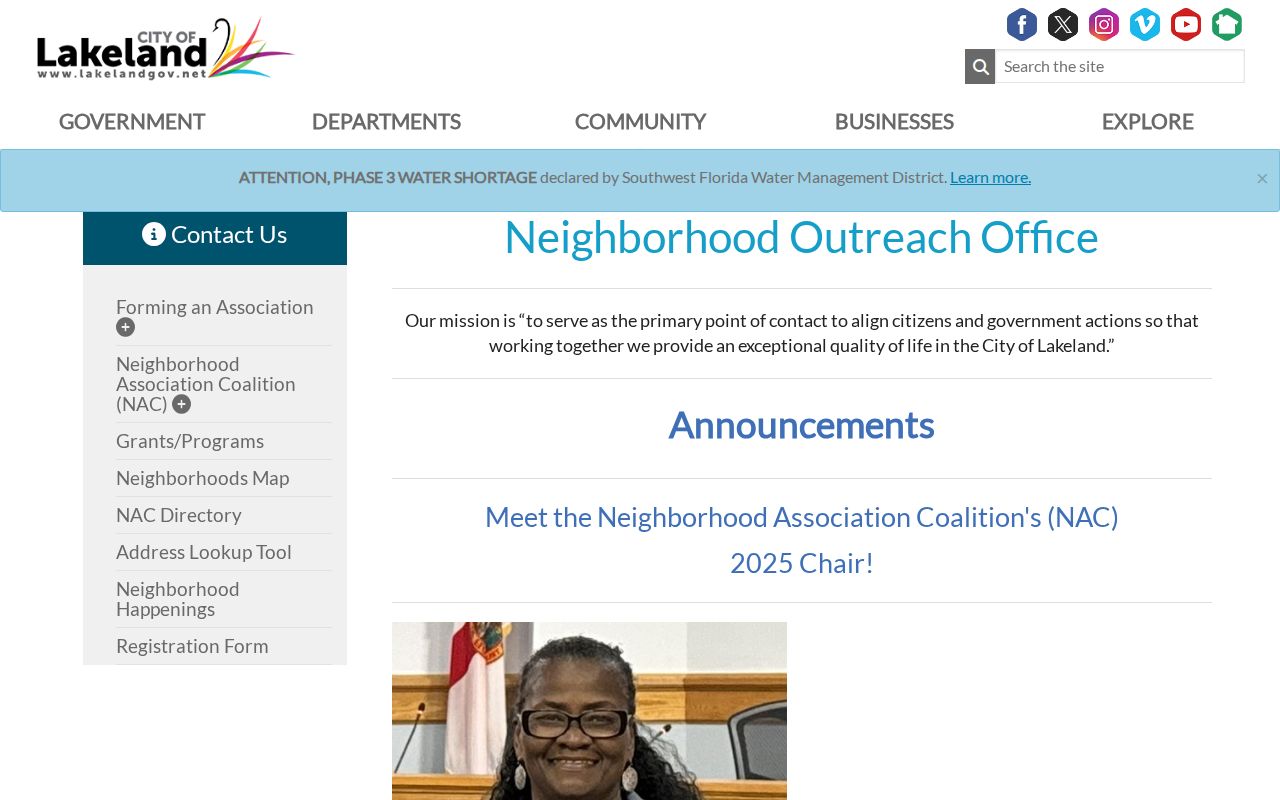
Neighborhood Outreach
228 S Massachusetts Ave
Lakeland, FL 33801
863-834-6011
Public contact
neighborhoodoutreach@lakelandgov.net
Fax: 863-834-8432
Lakeland Block Voter Requests
Polk's personalized Check Your Information tool authenticates one voter. It is not a browseable street roll. For block research, use the Supervisor of Elections' customized voter-list request and describe the municipality, precinct or district, named street, block range, desired public fields, sort order, and electronic format. Production and charges depend on the output.
Florida voter data can include name, residence and mailing address, birth date, party, status, registration and district fields, and participation history. Social Security numbers, driver-license or state-ID numbers, and registration source are confidential. Protected classes can have address information withheld. The monthly state extract can lag current election history, and inactive status does not prove an exact move date.
The custom request form is the access channel when the public website cannot answer a block question. Electronic custom responses are available; printed pages cost $0.15 after the first 25, while labels are priced at $9 per 1,000 plus a $7 processing charge. Ask for only the geography and fields needed. A broad request creates more same-name and stale-address work without revealing the residents who are not registered. Save the request description and production date so later readers know the file's scope.
Florida's official voter-information explanation draws the line between public fields and protected identifiers.
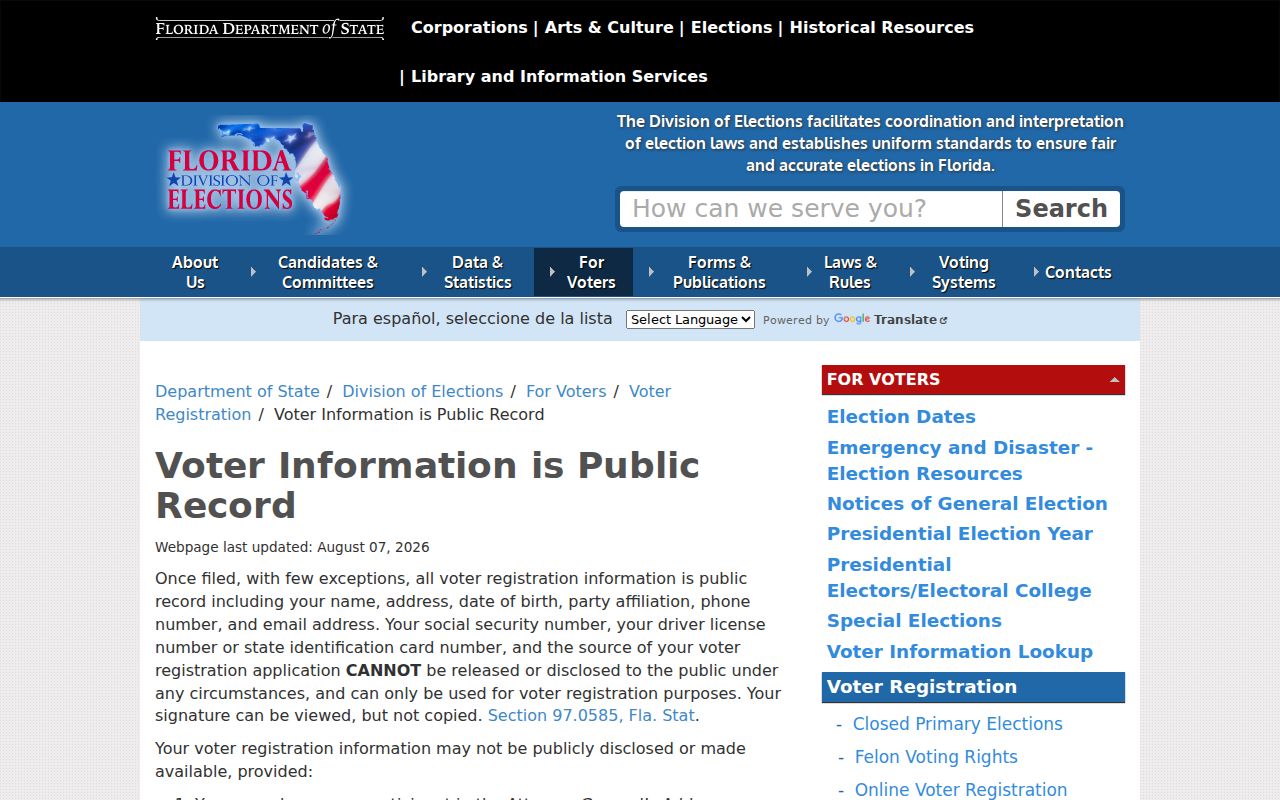
Apply those limits to every block request and never treat a redacted or absent address as an invitation to search around a protection.
Two routes. Use the personal lookup for your own record; use a lawful custom request for address-sorted public block data.
Historic Lakeland Neighbors
For who lived around a Lakeland address in an earlier era, use city directories and public census schedules. A reverse or criss-cross section arranges entries by street and number, letting nearby households appear in block order. Pair directory years with the 1920, 1930, 1940, and 1950 censuses. Census pages also preserve enumerated neighbors, though an enumeration route may not match a modern block.
Printed Lakeland directory evidence begins by 1915 and is frequent through 1960. The Lakeland History Room can check physical holdings, maps, photographs, obituaries, and house research sources. Do not treat a directory omission as proof that someone was absent. Black residents and institutions may be underrepresented in early mainstream directories, making church, school, neighborhood, and newspaper collections important companion sources.
Sanborn fire-insurance maps can place an older building and its neighbors in a dated street scene. They show footprint, construction, use, and address context, not a resident roster. When a number differs, compare the map with directory street indexes and the parcel's lot and block. No authoritative citywide renumbering crosswalk was found, so a modern number should not be projected backward without that check.
Official Lakeland Neighbor Records
Commercial neighbor tools combine property, voter, phone, and other feeds. That can be convenient, but it can also merge people, preserve old addresses, or imply that an owner is an occupant. Official sources are narrower and clearer about the date and custodian. Use the comparison to choose evidence, not to assemble a dossier.
| Source type | Strength | Limit |
|---|---|---|
| Official parcel roll | Current assessed owner tied to a parcel | Does not list every occupant |
| Official voter data | Defined public fields and geography | Not the full population; protected records omitted |
| City association directory | Voluntary civic leaders and meetings | Not a membership list |
| Commercial compilation | Combines several feeds | Source dates and identity matches may be unclear |
Keep the date and custodian beside every result. If a parcel owner differs from a voter name or association contact, do not force a match. One may be an off-site owner, another a registered occupant, and the third a volunteer serving a broad area. Corrections belong with the Property Appraiser, Supervisor of Elections, clerk, or city program that maintains the original record.
For a public-safety question, the FDLE registry has a separate neighborhood search by address and radius. Its results are registry records with a photo, designation, status, address, and source. It is not a general list of Lakeland neighbors and should never be presented as one. Use the statutory context on the official record and avoid turning a focused safety tool into speculation about other households. Other state or county systems likewise keep their own scope; a source designed for one legal purpose cannot fill gaps in the parcel, voter, or civic-directory layers.
The Polk County jail inquiry reports current county booking and custody information.
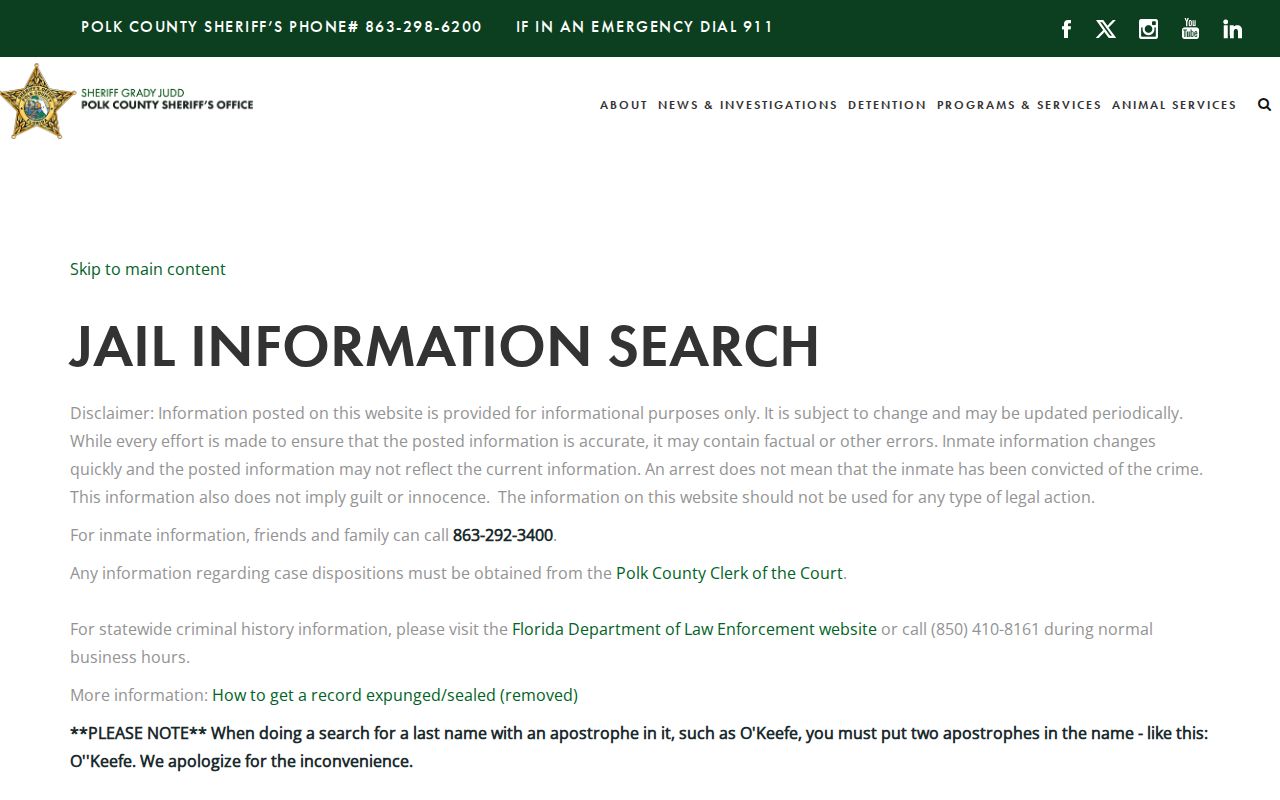
A booking record concerns custody at a stated time and does not prove that a person lives on the searched block.
The Florida Department of Corrections search separately covers state incarceration and supervision records.
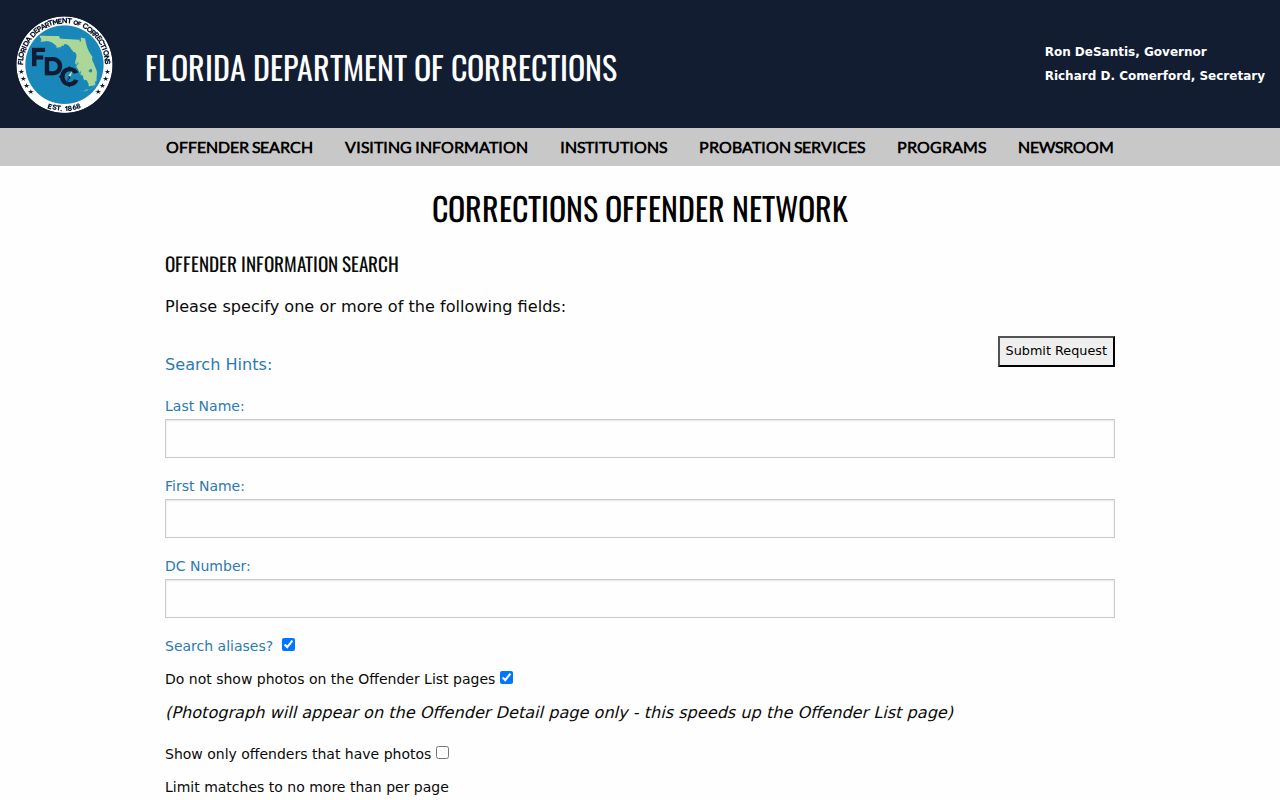
Keep state corrections results distinct from local jail data and verify identity through the official record rather than a shared name.
Privacy for Lakeland Neighbors
No public source lists every person on a block. Parcel rolls focus on ownership. Voter files omit whole groups and shield confidential identifiers. Florida's Address Confidentiality Program and high-risk-professional exemptions can protect addresses. Private membership rolls, utility customer accounts, delivery data, and personal contact lists should not be treated as open block directories.
Use public records for civic curiosity, reconnecting, and personal safety. Confirm information with the office that keeps it, and accept a protected field as a real stop. A person's absence from a map, voter file, or association list says little about whether that person lives nearby.
Lawful use. Lakeland neighbor lookups must remain respectful and legal. Never use an address or contact detail to watch, threaten, harass, or intimidate anyone.